 FREE DELIVERY $180+ AUD
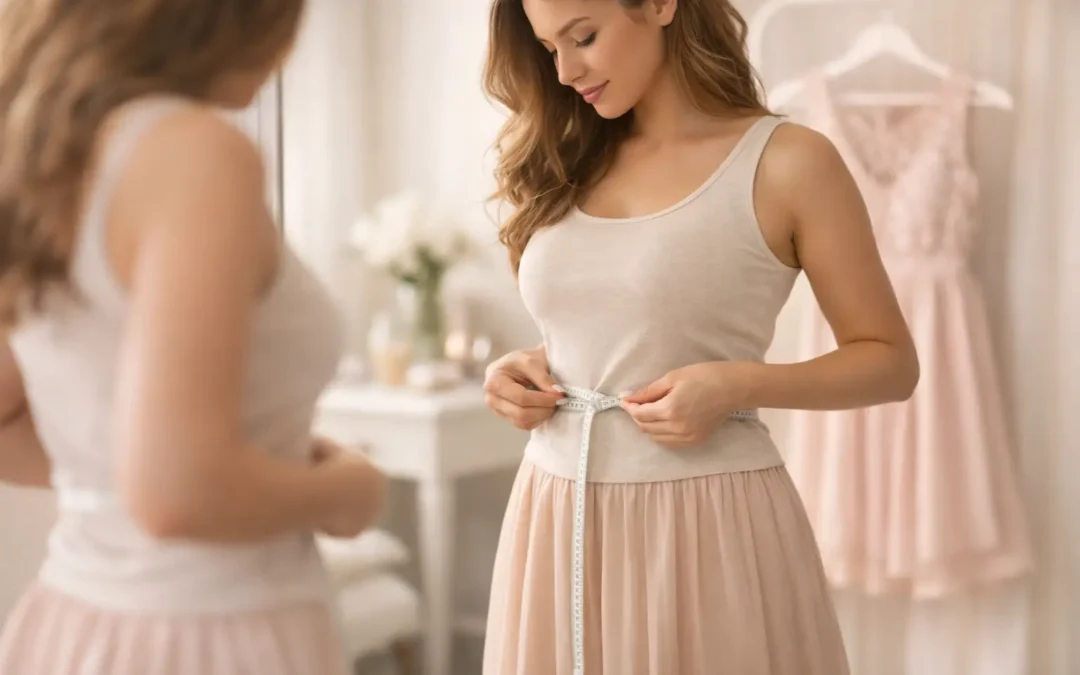
Buying an event dress online should feel exciting, not like a guessing game. If you have ever found yourself between sizes, unsure whether to size up for comfort or down for shape, learning how to measure dress size properly is the easiest way to shop with more confidence.
The good news is that you do not need professional tailoring skills or special equipment. A soft measuring tape, a mirror and a few spare minutes are usually enough to get the numbers that matter. Once you know your measurements, it becomes much easier to compare them with a size chart and choose a dress that feels flattering, comfortable and event-ready.
How to measure dress size correctly
The most accurate way to measure dress size is to take your bust, waist and hip measurements while wearing close-fitting clothing or underwear. Try to stand naturally without pulling the tape too tight. If the tape digs in, your numbers will be smaller than your true size, and that often leads to a dress that feels too firm through the body.
If possible, ask someone to help you. You can measure yourself, but having another person hold the tape level usually gives a better result, especially around the back. A full-length mirror also helps you check that the tape is sitting straight rather than slipping higher or lower on one side.
It is also worth measuring more than once. A difference of even one or two centimetres can affect the size you choose, particularly in fitted formal dresses, bridesmaid dresses and styles with structured bodices.
Measure your bust
Wrap the tape around the fullest part of your bust, keeping it level across your back. Your arms should be relaxed by your sides, and the tape should sit comfortably without flattening the bust. This is especially important for fitted evening dresses, corset styles and dresses with bust cups, where a small measuring error can change how the whole bodice sits.
If you plan to wear a specific bra with the dress, measure while wearing a similar style. A padded, strapless or supportive bra can change your bust measurement enough to affect your ideal size.
Measure your waist
Your natural waist is usually the narrowest part of your torso, sitting above your hips and below your bust. A simple trick is to bend slightly to one side – the crease that forms is often where your natural waist sits.
Place the tape around this area and breathe normally. Do not suck in your stomach. It feels tempting, especially when shopping for a special occasion, but it will not help you choose a better fit. A dress that looks elegant online still needs to feel comfortable through dinner, dancing and a long event schedule.
Measure your hips
For hip measurement, wrap the tape around the fullest part of your hips and bottom. Keep your feet together and make sure the tape stays level all the way around. This measurement matters most for bodycon dresses, satin styles, fitted midi dresses and any silhouette that skims closely over the lower body.
If your hip measurement places you in a different size from your bust or waist, that does not mean the dress is wrong for you. It usually means you need to consider the cut of the dress more carefully.
Why your dress size can vary between styles
One of the biggest frustrations in women’s fashion is that your size is not always the same across every dress. That is normal. A relaxed A-line dress may fit beautifully in one size, while a structured mermaid gown may need a different size to accommodate your bust or hips.
Fabric plays a major part. Stretch jersey, mesh and fabrics with elastane are often more forgiving, while satin, sequins, tulle and woven fabrics with minimal stretch usually require more precision. Design details matter too. A lace-up back can offer flexibility, while a zip-up fitted bodice tends to be less forgiving.
This is why measurements matter more than the number on the tag. When you shop for occasionwear, it is better to focus on fit through the key points of the body rather than trying to force every style into the same usual size.
How to use measurements with a size chart
Once you have your bust, waist and hip measurements, compare them against the retailer’s size chart rather than relying on what you normally wear in everyday clothing. Casual wear and occasionwear are often cut differently, and formal dresses can be more structured through the bust and waist.
If your measurements sit across two sizes, the best choice depends on the dress. For a fitted style with no stretch, it is usually safer to choose the larger size. For a relaxed silhouette or a style with stretch, your smaller size may still work well. If one area of your body measures into a larger size, prioritise that area first, especially if the dress is firm or tailored.
For example, if your bust fits one size and your hips fit the next size up, a full-skirted dress may still work in the smaller size because the skirt has room. A fitted satin gown, on the other hand, may need the larger size to sit smoothly.
If you are between sizes
Being between sizes is very common, particularly in bridesmaid and formal shopping. The practical question is not whether you are a perfect standard size. It is whether the dress will fit well enough in the areas that cannot easily be adjusted.
Generally, it is easier to take a dress in slightly than to let it out if there is no extra seam allowance. If you are shopping for a major event and the dress is close-fitting, sizing up can be the more comfortable option. That extra room can be helpful if you want movement, if the fabric has little stretch, or if you are concerned about the fit across the bust or hips.
Common mistakes when measuring dress size
A few simple mistakes can throw your numbers off and make online shopping harder than it needs to be. The most common issue is pulling the tape too tightly. Another is measuring over bulky clothing, which adds extra centimetres and can make you order larger than necessary.
It is also easy to measure the wrong part of the waist or hips. Many women naturally place the tape where low-rise jeans sit, rather than at the natural waist. Others measure the upper hip instead of the fullest part. Those small differences matter when you are choosing a fitted dress.
Old measurements can also be misleading. Even if you bought a formal dress recently, it is worth checking again before placing a new order. Bodies change, and sizing across brands and dress cuts can vary.
Extra measurements that can help
For some dresses, bust, waist and hips are enough. For others, a few extra numbers can make your decision much easier. Hollow-to-hem or shoulder-to-floor can be useful for maxi dresses, particularly if you are petite or tall. Shoulder width may also help with long-sleeve styles or dresses with more coverage through the upper body.
If you are shopping for a bridal party, taking everyone’s measurements carefully from the start can save time and reduce exchanges later. This is especially useful when ordering multiple dresses in different sizes or silhouettes.
How to measure dress size for different body shapes
There is no single “ideal” set of proportions for a dress. The goal is simply to choose a style that fits your shape well and feels good to wear. If your bust is fuller, you may need to size around the bust first and then consider whether the waist can be altered. If your hips are fuller, a fitted skirt will usually need more room, while an A-line shape may give you greater flexibility.
For women who wear extended sizing, accurate measurements are even more helpful because they make it easier to compare styles and understand where a dress is designed to sit on the body. A good size range only works well when you can match it to real measurements with confidence.
At Chic Evening Dresses, that is why fit information matters so much. When you are choosing a dress for a wedding, formal or special event, having clear measurements gives you a stronger starting point than guessing ever will.
When to get professional help
If your event is especially important, such as a wedding, black-tie function or school formal, and you are ordering a more structured gown, a local dressmaker or alterations specialist can help confirm your measurements. This is not always necessary, but it can be worthwhile if the dress is heavily fitted or if you often struggle to find the right size online.
Professional measuring is also useful if your proportions do not line up neatly with standard charts. That is more common than many shoppers realise, and it does not mean the dress will not work. It just means fit may need a more thoughtful approach.
Knowing how to measure dress size gives you a clearer, calmer way to shop. A few accurate numbers can make the difference between second-guessing every size and choosing a dress that feels right from the moment you try it on.
